
Soundtrack to a Coup d'Etat
2024 | 150m | French
Popularity: 1.0 (history)
| Director: | Johan Grimonprez |
|---|---|
| Writer: | Johan Grimonprez |
| Staring: |

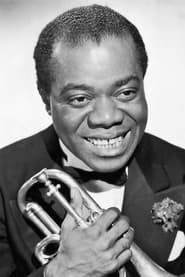
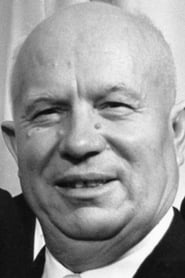
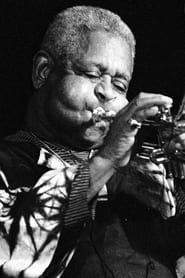

| Jazz and decolonization are intertwined in a powerful narrative that recounts one of the tensest episodes of the Cold War. | |
| Release Date: | Sep 11, 2024 |
|---|---|
| Director: | Johan Grimonprez |
| Writer: | Johan Grimonprez |
| Genres: | History, Music, Documentary |
| Keywords | central intelligence agency (cia), war crimes, belgium, cold war, congo, coup d'etat, fidel castro, genocide, united nations, american embassy, u.s. embassy, 1960s, ex-cia agent, katanga conflict, malcom x, democratic republic of the congo, eisenhower, belgian air force, cia agent, u.n. secretary general, congo war, patrice lumumba, cia officer, max roach, cia crimes, cia war crimes, usa war crimes, belgian war crimes, nato war crimes, operation gladio, nikita khrushchev, abbey lincoln, cia operatives, cia brutal assassination, cia brutal murders, belgian brutal murders, general mobutu, mobutu war crimes, mobutu's bandits, brutally tortured their prisoners, journalists bought executions, nato operation, nato involvement, eisenhower war crimes, moïse tshombe, moïse tshombe war crimes, katanga mine, american ambassador, american ambassador involved, american embassy involved, belgian colonizers, american and belgian colonizers, american colonizers, ussr presents resolution to end colonialism, resolution to end colonialism, death to colonial slavery, u.n. general assembly, declaration against colonialism, general assembly resolution 1514, dag hammarskjöld murder, u.n. resolution 929, maurice mpolo, joseph okito, belgian military, foreign military, andree blouin, in koli jean bofane, allen dulles, allen dulles cia director, cia a crime syndicate, south african mercenary |
| Production Companies | RTBF, Zap-O-Matik, VRT, BALDR Film, ZKM Karlsruhe, Onomatopee Films, Warboys Films |
| Box Office |
Revenue: $311,457
Budget: $0 |
| Updates |
Updated: Feb 03, 2026 Entered: May 31, 2024 |
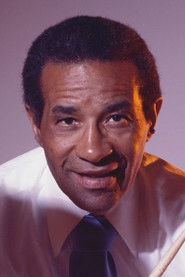


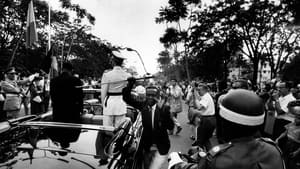
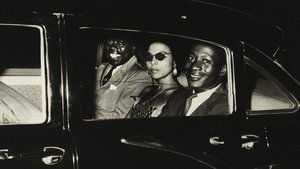

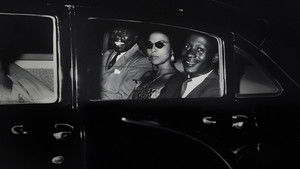










| Name | Character |
|---|---|
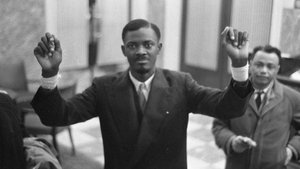
| Patrice Lumumba | Self (archive footage) |
| Louis Armstrong | Self (archive footage) |
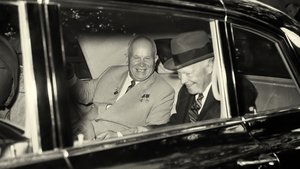
| Nikita Khrushchev | Self (archive footage) |
| Dizzy Gillespie | Self (archive footage) |
| Andrée Blouin | Self (archive footage) |
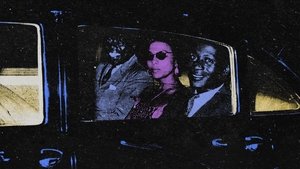
| Abbey Lincoln | Self (archive footage) |
| Max Roach | Self (archive footage) |
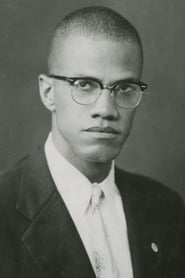
| Malcolm X | Self (archive footage) |
| Nina Simone | Self (archive footage) |
| John Coltrane | Self (archive footage) |
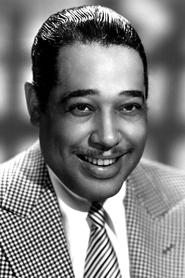
| Duke Ellington | Self (archive footage) |
| Miriam Makeba | Self (archive footage) |
| Conor Cruise O’Brien | Self (archive footage) |
| Dwight D. Eisenhower | Self (archive footage) |
| René Magritte | Self (archive footage) |
| Allen Dulles | Self (archive footage) |
| In Koli Jean Bofane | Self |
| Gamal Abdel Nasser | Self (archive footage) |
| Fidel Castro | Self (archive footage) |
| Name | Job |
|---|---|
| Johan Grimonprez | Writer, Director |
| Raydrick Feliciana | Assistant Editor |
| Aaron Minnebo | Assistant Editor |
| Pedro Gossler | Assistant Editor |
| Ranko Pauković | Sound |
| Rik Chaubet | Editor |
| Jonathan Wannyn | Cinematography |
| Name | Title |
|---|---|
| Rémi Grellety | Producer |
| Daan Milius | Producer |
| Organization | Category | Person |
|---|
Popularity History
| Year | Month | Avg | Max | Min |
|---|---|---|---|---|
| 2024 | 4 | 1 | 1 | 1 |
| 2024 | 5 | 1 | 1 | 1 |
| 2024 | 6 | 1 | 2 | 0 |
| 2024 | 7 | 3 | 10 | 1 |
| 2024 | 8 | 1 | 3 | 0 |
| 2024 | 9 | 3 | 7 | 1 |
| 2024 | 10 | 3 | 6 | 1 |
| 2024 | 11 | 3 | 8 | 2 |
| 2024 | 12 | 3 | 6 | 2 |
| 2025 | 1 | 8 | 16 | 3 |
| 2025 | 2 | 8 | 13 | 2 |
| 2025 | 3 | 8 | 23 | 0 |
| 2025 | 4 | 1 | 2 | 1 |
| 2025 | 5 | 1 | 2 | 1 |
| 2025 | 6 | 1 | 2 | 1 |
| 2025 | 7 | 0 | 1 | 0 |
| 2025 | 8 | 0 | 2 | 0 |
| 2025 | 9 | 1 | 1 | 0 |
| 2025 | 10 | 1 | 2 | 1 |
| 2025 | 11 | 3 | 7 | 0 |
| 2025 | 12 | 2 | 7 | 0 |
| 2026 | 1 | 0 | 1 | 0 |
| 2026 | 2 | 1 | 2 | 0 |
| 2026 | 3 | 1 | 2 | 0 |
Trending Position
| Year | Month | High | Avg |
|---|---|---|---|
| 2026 | 3 | 976 | 976 |
| Year | Month | High | Avg |
|---|---|---|---|
| 2026 | 2 | 893 | 912 |
| Year | Month | High | Avg |
|---|---|---|---|
| 2025 | 9 | 702 | 779 |
| Year | Month | High | Avg |
|---|---|---|---|
| 2025 | 3 | 235 | 562 |
| Year | Month | High | Avg |
|---|---|---|---|
| 2025 | 2 | 727 | 865 |
| Year | Month | High | Avg |
|---|---|---|---|
| 2025 | 1 | 144 | 569 |
This documentary is a serious testament to the archivist's art as it pieces together an impressive array of imagery of the great and the good of American Jazz and combines that with some intimate actuality of the turbulence ongoing in the Congo as it strived for independence. Why might anyone care a ... bout the future of an impoverished African nation that had all but bankrupted it's "owner" - King Leopold II of Belgium? Well that's because it holds enormous deposits of the uranium required by both the West and the Soviets - and that's just the start of it's reputedly $23 trillion worth of mineral assets. Emerging from the populace to lead this new country is Patrice Lumumba. He's an articulate man who unlike so many who took their nations out of colonial-hood, is not constantly bedecked in medals and ribbons with armed men at his back. What we see over the next couple of hours uses a superb musical soundtrack from the likes of Nina Simone, Louis Armstrong, Miles Davis - you name it, to provide a backdrop to CIA shenanigans, petulant strops from Nikita Khruschev, accusatory comments from just about everyone from Malcolm X to Fidel Castro and some extremely cynical insights into the Eisenhower presidency's approach to this man; to the problems he may bring or solve and to the precedents he was bound to set. As you'll expect, this freedom fight is tied-in closely with the fight for desegregation and equal/human rights for African American people and it uses that platform to illustrate just how ineffective the US-dominated United Nations was at brokering anything akin to a peaceable solution that was in anyway neutral or beneficial to the populace of this vast territory. The secession of Katanga - where the mining was at it's more lucrative and the privatisation of it's principal enterprise ensured that the West still pulled the strings, sets the tone for the final phase of the history and it's tragic conclusion. I knew some of this but I wasn't aware of just how exploitatively the American administration used unwitting people, many globally recognised household hames and who were still treated as second-class citizens (if citizens at all) at home, to peddle a political message of brotherhood and unity in Africa and at just how effective these deceptions were whilst the CIA experimented with new ways of assassinating. There's an arrogance here that's writ large as the local population are treated with a casual disdain that makes your flesh crawl. Fans of jazz will love the accompaniment which mixes some characterful performances of the more famous pieces of music from the genre with some more specifically written and delivered themes that directly address the issues of slavery, exploitation and freedom that led to a protest within the impotent General Assembly chamber itself. It is curious that many of the criticisms levelled at the UN in the mid 1960s are just as valid today, and that little progress as been made changing the format that was established by world powers in the 1940s whose "permanent" roles embedded in the political infrastructure remain unaffected sixty years later. This isn't a film about corporate greed, it's one about political influence and domination and has been thoughtfully put together to open a hornet's nest. Did you know that Dizzy Gillespie actually ran for US President?
Perhaps the most important objective of a documentary is to shed light on a subject and make it comprehensible and insightful for viewers, especially when it involves little-known material. However, when it comes to writer-director Johan Grimonprez’s latest offering, that goal is sorely compromised ... in multiple respects. The film examines (or, more precisely, attempts to examine) the complex history of the Congo’s struggle for independence from its Belgian colonial masters and the emergence of Prime Minister Patrice Lumumba as a global influencer in the 1950s and early 1960s. The fledgling, resource-rich nation became a flashpoint in international politics on various fronts, including the Cold War between East and West, the rise of the pan-African movement, the ongoing decline of colonial imperialism and the role of the United Nations in global affairs. Its impact also extended into American politics, particularly the birth and growth of the civil rights movement and its impact on leaders like Malcolm X, as well as the Eisenhower Administration’s veiled efforts at protecting the status quo, especially through seemingly benign cultural programs like goodwill exchanges involving popular Black jazz musicians. Many threads are thus involved in telling this tale, but, regrettably, they’re not coherently managed, particularly in the picture’s opening hour (of a surprisingly and arguably somewhat needlessly overlong 2:30:00 runtime). The filmmaker throws a lot of widely diverse material at his audience without coherent, meaningful explanation, and much of that involves reading a series of cryptic screen graphics that fly by hastily with little elaboration, a process that quickly becomes aggravating, frustrating and tiresome, even for the most adept subtitle readers. Then there’s the jazz aspect of this release, whose connection to the narrative isn’t always made clear or relevant, despite its addition of an element of artistic flair. However, these performance sequences – as entertaining and poignant as they are – ultimately do more to promote the film’s style than its substance, To its credit, “Soundtrack to a Coup d’Etat” becomes more cogent (albeit somewhat politically oversimplified) as it moves forward, but, by that point, audiences may well have lost patience with it (I was admittedly on the verge of turning it off myself after the opening 60 minutes, something I generally never do). It’s also obvious that the material here was exceedingly well researched and incorporates a wealth of revelatory archive footage, both from journalistic and jazz performance sources, qualities definitely worthy of commendation. However, a more fluid, better organized telling of this tale (especially one that doesn’t skip around out of temporal sequence) would have helped immeasureably, as would have a better elucidated nexus between its political and musical aspects. There’s clearly an important story to be told here, but this isn’t the vehicle for doing so.